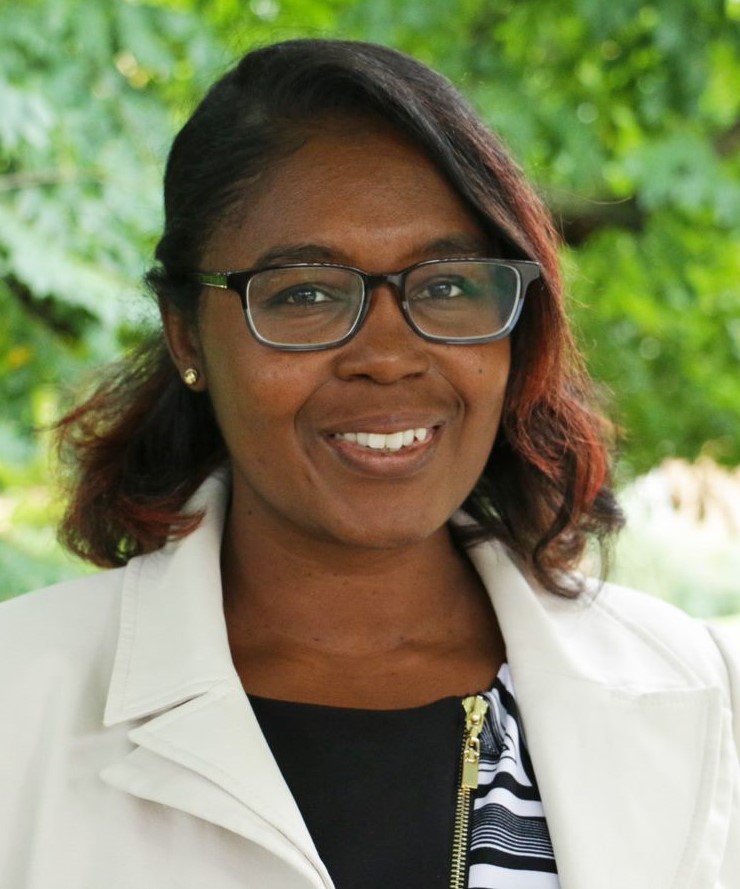
Dr. Natasha Tonge received her B.A from Swarthmore College where she graduated with a special major in Biopsychology and a minor in Art History. She received her M.A. and PhD from Washington University in St. Louis. She completed clinical internship at the Minneapolis VA and Postdoctoral Fellowship at the VISN 5 MIRECC in Baltimore, Maryland.
Dr. Tonge’s research interests emerged over time, shaped by both personal and professional experiences. In high school she took a new Psychology class and was fascinated by work from both B.F. Skinner and Zimbardo’s Stanford Prison Experiment. It sparked a curiosity about social behavior that initially brought her to a variety of undergrad experiences including work in language, perception, and with birds!
From there her path moved toward people. She studied social motivation and social learning in children with autism, then in graduate school shifted to social anxiety, examining how interpersonal context shapes symptom presentation. Her postdoctoral work brought her to serious mental illness and internalized stigma, deepening her focus on how people carry and navigate stigma internally.
Running alongside all of this has been her clinical work. As a Black female provider, even as a trainee, she noticed that the relationships she formed with clients and the way disclosure from patients varied with the type of provider, their level of training, and their expressed social identities. That observation became a driving question behind her research, how do people decide what to disclose, to whom, when, and why it differs so much person to person.
It was not a linear intellectual path but it has been a rewarding one! Today her lab brings all these threads together, studying trust, stigma, and help-seeking using a variety of tools, inspired by network and complexity science perspectives and grounded in the belief that mental health struggles and support-seeking are shaped by complex, interacting systems rather than any single cause. Her current research is focused on trust/mistrust in patient-provider relationships, specifically for mental health service delivery and in healthcare contexts. She is most interested in addressing the following questions:
1) how do we assess experiences of mistrust in patient-provider relationships when mental health is a potential treatment target?
2) how are trust, help-seeking, and self-disclosure in the patient-provider relationship influenced by context – whether that be the type of treatment delivery (e.g., mHealth, telehealth, face-to-face), the setting (e.g., social media, in-person) or type of relationship (e.g., professional relationships, friendships, parasocial interactions, with generative AI)?
3) how can we use machine learning and AI to understand and address disparities in mental health diagnosis and approaches to care?
Understanding how those with minoritized and/or stigmatized identities (e.g., racial/ethnic minorities, sexual/gender minorities, serious mental illness) experience and express themselves in these contexts is central to all of her research questions.
Recent Awards
Saving Young Lives and Decreasing Health Disparities Through the Dissemination of Culturally Sensitive Evidence-Based Assessment to State-Funded Behavioral Health Organizations HHS/Substance Abuse and Mental Health Services Administration (SAMHSA) Dates of award: 08/19/23 – 08/18/25 Role: N. Tonge, Co-I
Using Machine Learning to Improve Mental Health Screening for Racial/Ethnic Minorities 1OT2OD032581-1-35 Dates of award: 09/1/2022 – 08/31/2023 Role: N. Tonge, PI.
Enhancing Depression Health Screening for Racial/Ethnic Minorities with Behavioral Comorbidities Through Machine Learning
1OT2OD032581-1-31-401 Dates of award: 09/1/2023 – 08/31/2024 Awarded to Jesús Hernández Ortiz; Role: N. Tonge, Institutional Mentor/PI

